how to see what kind of mortgage you can get
Mortgage Qualification Estimator
The first step in ownership a business firm is determining your upkeep. The mortgage qualifier computer steps you through the process of finding out how much you can borrow. Yous can summate your mortgage qualification based on income, purchase price or total monthly payment.
For your convenience we publish current local mortgage rates to assist you estimate the price of various loan options and connect with a local lender.
Current Local Mortgage Rates
The following tabular array shows current local 30-year mortgage rates. You lot can utilise the menus to select other loan durations, alter the loan amount, change your down payment, or alter your location. More features are available in the advanced drop down
The Consumer's Guide to Qualifying for a Mortgage

Deciding to buy a firm is a principal financial commitment. It'southward one of the nearly expensive major purchases yous'll make in a lifetime. And for most people, it tin can take decades to pay down a mortgage.
Earlier you can buy your ain property, there are several steps you must take to qualify for a loan. Mortgage lenders will evaluate your ability to repay your loan, every bit well as how much you might exist able to borrow.
Our guide volition introduce y'all to the basic mortgage qualifying process and discuss essential fiscal aspects you should prepare for. This includes your credit score, income, debt-to-income ratio, and your downwardly payment. We'll as well talk almost different types of home loans and their unique requirements, as well every bit other important information you demand to know about qualifying for a mortgage.
The Mortgage Qualification Process
Aspiring homeowners commonly undergo 2 qualifying steps before they are approved for a mortgage. These steps are called mortgage pre-qualification and pre-approval. While both procedures similarly evaluate your creditworthiness, pre-approval has a greater influence on whether you can shut a mortgage deal. And for first-time homebuyers, it'due south crucial to get pre-qualified kickoff to appraise your full general eligibility for a home loan.
Getting Pre-Qualified
Mortgage pre-qualification is an informal approximate of how much money yous tin can infringe for a habitation loan. It normally takes just one to three days and can be done online or over the telephone. A lender reviews your income, avails, and debts based on self-reported information. They do not perform hard inquiries on your credit study, which ways it does not touch on your credit score.
Pre-qualification is a good way to know if you meet minimum requirements to secure a mortgage. Information technology'southward a vital indicator, particularly for starting time time homebuyers who demand to improve their credit status.
Obtaining Pre-blessing
Pre-approval is the side by side step that thoroughly evaluates your creditworthiness. This can take a few days to a couple of months, depending on the strength of your credit profile and whether you lot take consummate documents. Applicants with low credit scores or history of missed debt payments take longer to obtain pre-approval. Evaluations are based on official financial documents that are verified past the lender.
A lender investigates the following factors earlier granting pre-approval:
- Income
- Credit history
- Credit score
- Debt-to-income ratio
- Assets and liabilities
- Employment history
Applicants must gather the following documents for a pre-approving application:
- Federal tax returns (at least ii years)
- Pay stubs (worth 30 days with yr-to-date income)
- W-2 statement or 1099 from employers
- Quarterly statements for savings accounts & checking accounts
- Proof of added income (bonuses, alimony, etc.)
During pre-blessing, you must provide your Social Security number and fill out a mortgage application. Lenders verify your income and employment by straight contacting your employer. They request for income information and other related credentials. Though nigh lenders but ask for a verbal confirmation, others might request for an email verification. Furthermore, expect lenders to perform a hard credit check on your credit report, which means information technology tin can affect your credit score.
For those who are self-employed, lenders confirm your income by reviewing tax return transcripts from the IRS. In general, obtaining a mortgage when you're self-employed can be more than challenging. Yous need to evidence you have a reliable income source. Lenders are concerned with the viability of your business and whether you tin can sustain monthly mortgage payments. But once your lender sees your income is high and sustainable enough, you can go approved. It'southward besides a plus if yous can show a big amount of greenbacks reserves and pay a loftier downwardly payment.
Once you receive a pre-approval letter, a lender approves a specific amount and includes a possible involvement rate. Consumers who obtain pre-approval are perceived equally more than serious homebuyers. Sellers also asking for a pre-blessing letter in one case yous're ready to make a deal. Only take note: Pre-blessing letters are only valid for 60 to 90 days. So time your application accordingly. If you do not secure an offer inside that time, yous must reapply to get a pre-blessing letter again.

The Pre-Approval Advantage
Pre-approved homebuyers are perceived to offer more financial reliability than pre-qualified ones. While pre-qualifying allows you lot to appraise your readiness for a mortgage, pre-blessing is a conditional commitment from a lender to officially offer you lot a loan. This is why it holds more weight when it comes to securing a mortgage deal.
Major Factors that Influence Mortgage Eligibility

When qualifying for a mortgage, lenders rely on standard indicators that determine whether a borrower can repay a loan. These financial factors also influence how much they are willing to lend borrowers. Lenders will thoroughly evaluate your income and assets, credit score, and debt-to-income ratio.
Income and Assets
I of the first things lenders appraise for mortgage eligibility is income. This is a major gene because it shows how stable and predictable your finances are. Having a high income with stable employment lowers default risk for lenders. Thus, you lot have college chances of qualifying for a mortgage with a long-term job and reliable sources of income.
Besides assessing your income from piece of work, lenders also check any additional money you may receive. Take notation: Additional income is only considered by lenders if the source tin can continue for 3 years. This includes money from sources such as:
- Overtime payments
- Part-time payments
- Work bonuses
- Income from investments
- Social Security payments
- Pension income
- Alimony and child back up payments
- Military machine benefits or allowances
Next, expect lenders to evaluate your assets. Borrowers with high-value assets are perceived every bit less risky past lenders. Avails are considered a valuable fiscal absorber that tin can protect you in case of emergencies. In the event of fiscal hardship such as sudden job loss or company closure, assets assist continue you afloat while looking for another stable source of funds. To verify your avails, lenders asking for the following documents:
- Checking and savings accounts
- Certificates of deposit (CDs)
- Mutual funds, stocks, and bonds
- IRA accounts
- 401(k) accounts
- Other active retirement accounts
Debt to Income Ratio (DTI)
Another of import factor lenders watch out for is your debt-to-income ratio (DTI). This is a percentage that shows how much of your monthly income goes toward your debts. Specifically, DTI measures your total monthly debt payments compared to your gross monthly income.
A loftier DTI ratio indicates you lot're overleveraged, which means you're not in a good financial position to take on more than debt. If you do get canonical with a high DTI ratio, y'all're likely assigned a higher interest rate. Likewise, a low DTI ratio is a sign you have enough money coming in to pay for your debts. This lowers the gamble of defaulting on your mortgage.
Furthermore, expect conventional mortgages to take unlike DTI limits from government-backed loans. Let's review the different types of mortgages below.
Most homebuyers mostly choose conventional loans, which are not directly financed past the government. Conventional loans are usually packaged into mortgage-backed securities that are guaranteed by Fannie Mae and Freddie Mac. These are available through private lenders such every bit banks, credit unions, and mortgage companies.

PMI on Conventional Loans
Private mortgage insurance or PMI is required for conventional mortgages when your down payment is less than twenty% of the home'south value. This is an added fee that protects your lender if you fail to pay dorsum your loan. PMI is typically rolled into your monthly payments, which costs 0.v% to 1% of your loan per year. It'southward only required for a limited fourth dimension, which is canceled equally presently every bit your mortgage balance reaches 78%.
On the other manus, homebuyers can choose from the following authorities-backed loans.
MIP for Government-backed Loans
When you obtain a regime-backed mortgage such equally an FHA or USDA loan, yous're required to pay mortgage insurance premium (MIP). This added fee protects your lender in case y'all default on your loan. MIP is usually rolled into your monthly payments, which costs between 0.80% to 0.85% of your loan per twelvemonth. Unlike PMI for conventional loans, MIP for FHA and USDA loans are usually required for the entire payment term. For this reason, borrowers with government-backed loans somewhen refinance into a conventional mortgage to remove this extra cost.
Since different loans cater to different needs, DTI limits vary per type of mortgage. The table beneath details the front end-end and dorsum-terminate DTI requirements for conventional and government-backed mortgages:
| Loan Type | Front-terminate DTI Limit | Dorsum-end DTI Limit |
|---|---|---|
| Conventional | About lenders prefer 28% | Maximum is l% with compensating factors Nigh lenders accept 43% Should Ideally be 36% |
| Jumbo | Most lenders adopt 28% | Maximum is 50% with compensating factors About lenders accept 43% Should Ideally exist 36% |
| FHA | Should non exceed 31% If your DTI is 46.9%, you cannot be approved via Automated Underwriting Organization | Should not exceed 43% if your FICO score is 620 Tin can accept 50% if your FICO score is over 620, but many lenders may take stricter standards |
| VA | Back-end DTI is the main basis. | Lender's benchmark is 41% Varies per lender |
| USDA | Betwixt 29% to 32% Can be college with compensating factors | Should not exceed 41% |
Proposed Changes for Mortgage Qualifications
In June 2020, the Consumer Financial Protection Bureau (CFPB) announced steps to accost GSE patches, suggesting that the DTI ratio tin can be removed as a primary requirement to authorize for mortgages. To take its place, lenders would have to rely on loan pricing data as the main basis for mortgage approving. CFPB ended that a price-based approach is a stronger indicator and more flexible mode to measure a borrower'due south ability to repay compared to DTI alone.
Credit Score
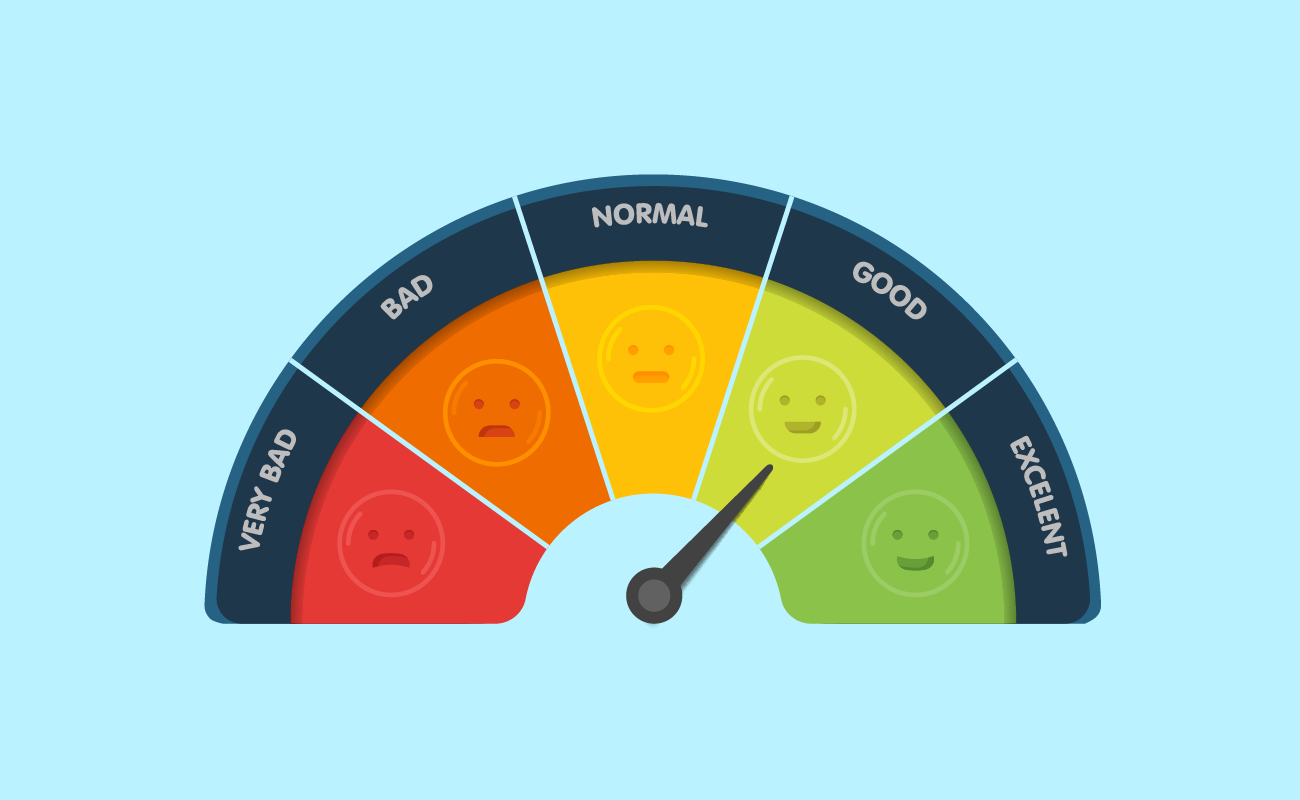
A credit score is a iii-digit rating that suggests how reliable you lot are equally a borrower. The higher your credit rating, the greater chances yous have for mortgage approval. It'south an indicator that shows how creditworthy you are for lenders. Credit scores are based on your credit report, which breaks down details like your payment history. It also shows how much of your bachelor credit you're using at a given time.
The result of your credit report is based specifically on the following financial factors:
- Payment history – 35%
- Amounts yous owed – 30%
- Credit history length – fifteen%
- Types of credit – 10%
- New credit – 10%
To obtain a conventional loan, many lenders prefer to approve a credit score of 680 and above (though some might approve a score as low as 620). For regime-backed loans, credit score requirements are more lenient. If you have a low credit rating, you may exist able to qualify for a regime-backed loan.
The post-obit are required credit scores for government-backed mortgages:
| Government-backed Mortgage | Credit Score Requirement |
|---|---|
| FHA | 500 is the minimum, 580 & in a higher place is ideal |
| VA | Flexible credit standards, only ideally 620 & above |
| USDA | Should be at least 640 |
Credit scores reverberate a borrower'south level of adventure, which is why lenders prefer applicants with high credit ratings. If y'all're habitually late with payments or accept records of delinquencies, it will reflect a poor credit score. Likewise, if you pay your bills on time and continue your debts within a manageable amount, your credit score will be higher. Information technology'south a sign that you're a diligent consumer that does non accept on too much debt.
Borrowers with fantabulous credit scores often obtain the lowest rates and the nigh favorable deals. Meanwhile, lenders impose a higher rate if yous have a lower credit score. This helps protect them in instance you default on your loan.
Improving Your Credit Score
Before y'all apply for a mortgage, be certain to get a copy of your credit written report. Borrowers may asking a free copy every 12 months. You may ask for a free copy at AnnualCreditReport.com.
If you have a poor credit rating, the National Foundation for Credit Counseling (NFCC) states that it can take 12 months to 24 months earlier your credit score improves. Yous tin raise your credit score by paying bills on time and significantly decreasing your credit card balance. Brand sure to bank check your credit report for errors, such as wrong addresses and unrecorded payments. Disputing inaccuracies to your credit bureau can help increment your credit rating.
Credit scores range betwixt 300 to 850 and are based on standards used by a credit reporting agency. The near widely used credit rating system ins FICO or the Fair Isaac Corporation, which is used by xc% of lenders in the U.South. It as well takes data from three major credit reporting bureaus (Experian, Equifax, and TransUnion) to determine consumers' credit ratings. Another credit rating classification system used by lenders is VantageScore, which has a slightly different scoring system from FICO.
The tables below show score range classifications for both FICO and VantageScore credit rating systems:
| Scores | FICO Classification | Effect on Rates |
|---|---|---|
| 800 – 850 | Infrequent | Obtains the best available mortgage rates. |
| 740 – 799 | Very Proficient | Receives better than boilerplate rates. |
| 670 – 739 | Proficient | Will likely get approved for credit. |
| 580 – 669 | Off-white | Subprime borrowers who are charged a college rate. |
| 300 – 579 | Very Poor | Will non probable be approved for credit. |
| Scores | VantageScore Classification | Upshot on Rates |
|---|---|---|
| 781 – 850 | Excellent | Receives the best rates at favorable terms. |
| 661 – 780 | Good | Volition get approved with competitive rates. |
| 601 – 660 | Fair | May be approved but non with competitive rates. |
| 500 – 600 | Poor | May be approved but assigned with a higher rate. |
| 300 – 499 | Very Poor | Will not likely be canonical for credit. |
Under the FICO rating system, scores between 670 to 739 are classified as "Good" or likely to exist canonical for a mortgage. Meanwhile, with VantageScore, scores between 661 to 780 accept high chances of approval with competitive rates. Aim to go along your credit score within these score brackets (or enhance it higher) to obtain favorable rates on your loans.
How Much Down Payment Should You lot Save?
Earlier buying a business firm, exist sure to give yourself enough time to salve for a down payment. While the amount depends on your budget, the home'southward price, and the type of loan yous accept, most fiscal advisers recommend saving for a twenty% down payment. This is a sizeable corporeality, which is more expensive if your dwelling house's value is college.
In September 2020, the median sales toll for new homes sold was $326,800 based on information from the U.S. Demography Agency. If this is the value of your dwelling, you must save a down payment worth $65,360. Paying 20% down lowers risk for lenders. It's a sign that you can consistently save funds and reliably pay back your debts.
Down Payments Vary
Downwardly payment requirements are different per type of loan. Still, many conventional mortgage lenders require at least 5% down. For authorities-backed loans such as an FHA loan, a borrower with a credit score of 580 tin make a downwards payment as low as 3.5% on their loan. Accept note: A smaller down payment subjects you to a higher involvement rate.
Though twenty% is the recommended down for a mortgage, in reality, this is non affordable for most borrowers. First-time homebuyers usually make lower downwardly payments. In a report by Experian, they gathered 2018 data from the National Association of Realtors and Relator.com. Their inquiry establish that the median down payment for all homebuyers in 2018 was only 13%, while outset-time homebuyers only spent vii% down. Echo homebuyers, on the other paw, only paid as much equally 16% down payment on a house.
Even so, it'south yet worth making a larger down payment on your mortgage. Here's why paying 20% down is more benign for homebuyers.
The Advantages of Paying 20% Down
- Improves your chances of loan blessing: Paying 20% down lowers risk for lenders. A larger down payment also makes you look like a more financially responsible consumer. This gives you better chances of qualifying for a mortgage.
- Helps lower your interest charge per unit: Paying twenty% down decreases your loan-to-value ratio (LTV) to 80%. LTV is an indicator which measures your loan amount confronting the value of the secured property. With a lower LTV ratio, you tin obtain a lower involvement rate for your mortgage. This will aid yous proceeds involvement savings over the life of your loan.
- Reduces your monthly payment: A large downwardly payment also significantly decreases your monthly mortgage payments. Though you spend more now, having lower monthly payments will make your upkeep more manageable. This gives you lot room to salvage extra money for emergency funds, retirement savings, or other worthwhile investments.
- Helps build home equity faster: Paying 20% down means paying off a larger portion of your loan. This allows y'all to pay off your mortgage sooner. If you lot program to make actress payments on your mortgage, having xx% disinterestedness will help speed up this process, assuasive you to cut a few years off your loan term.
- Eliminates private mortgage insurance (PMI): As mentioned earlier, PMI is an added price on a conventional loan if you pay less than 20% on your mortgage. Consider paying xx% down to avoid this extra fee.
Know the Closing Costs
Aside from the down payment, mortgages come with closing costs. These are fees you pay your lender to process your mortgage. Closing costs are generally 2% to 5% of your loan amount. According to ClosingCorp, in 2019, the average national closing toll for a unmarried-family home was $v,749. This is a considerable sum, and then don't forget to include it when you lot're budgeting for your mortgage.
Approximate How Much House You lot Can Afford
To help you get started, you can utilize our calculator on tiptop to guess the home price, closing costs, and monthly mortgage payments you lot can afford based on your almanac income. For our instance, allow's suppose you have an almanac income of $68,000. You're looking to get a thirty-yr fixed-rate loan at 3.25% APR. For your down payment and closing costs, you've saved $55,000. See the results beneath.
- Annual income: $68,000
- 30-year fixed-rate loan
- Rate: iii.25% APR
- Cash on hand: $55,000
| Mortgage Costs | Resulting Corporeality |
|---|---|
| Estimated House Price | $305,193 |
| Estimated Loan Amount | $252,720 |
| Total Monthly Mortgage Payment | $1,587 |
Based on the tabular array, if y'all have an annual income of $68,000, y'all can purchase a house worth $305,193. You may qualify for a loan amount of $252,720, and your full monthly mortgage payment will be $ane,587. Since your cash on manus is $55,000, that's less than 20% of the dwelling's toll. This means you have to pay for private mortgage insurance (PMI). Take note: This is but a rough estimate. The actual loan corporeality you may qualify for may exist lower or higher, depending on your lender'southward evaluation.
The following table breaks downwardly your full monthly mortgage payments:
| Monthly Payment Breakdown | Resulting Corporeality |
|---|---|
| Principal & Interest payment | $one,099.85 |
| Property Taxes | $254.33 |
| Dwelling house Insurance | $127.16 |
| Private Mortgage Insurance (PMI) | $105.30 |
| Total Monthly Mortgage Payment | $one,587 |
According to the table, your principal and interest payment is $i,099.85. When we add holding taxes and dwelling house insurance, your total monthly mortgage payment will be $ane,481.34. Merely considering you must pay PMI, information technology adds $105.30 to your monthly payment, which results in a total of $1,587 every month.
To avoid PMI, try to save xx% of the home's cost, which is $61,038.6. To comprehend your closing costs, you must save an boosted 2% to 5% of your loan amount. If your endmost cost is ii% of your loan, you lot should salve an added $5,054.40.
The example higher up gives you a improve idea how much firm you lot can afford, besides equally how much down payment and closing costs yous must prepare to salvage for your mortgage.
How Do Outset-Time Homebuyers Structure Loan Payments?
Most first-time homebuyers are people who are still building their income. Thus, many of them choose a 30-twelvemonth fixed-rate mortgage, which is a predictable payment structure that makes mortgage payments more manageable. The charge per unit is locked for the entire life of the loan, which means your principal and interest payments volition non alter. This is the contrary of an adaptable-rate mortgage (ARM), which comes with rates that change afterward the introductory menstruum.
Fixed-rate loans are a good fit for borrowers who want a convenient way to budget their mortgage payments. This is appealing to almost consumers considering it ensures monthly payments stay within an affordable range. It besides follows a traditional amortization schedule that shows the exact number of payments y'all must make within the agreed term. For example, with a 30-year stock-still-charge per unit mortgage, your payments are spread throughout 360 monthly payments. Your loan will surely exist paid within thirty years every bit long as you pay every bit scheduled.
As well the xxx-year fixed term, fixed rate loans also come in 10-yr, 15-year, and 20-year terms. More than homebuyers take 30-year fixed mortgages considering they have lower monthly payments. On the other hand, a brusk term requires college monthly payments to pay off your loan within a sooner time frame.
Take note: Choosing a longer term comes with higher interest charges. To relieve, many homeowners with 30-year fixed mortgages somewhen refinance into a shorter term when market interest rates are low.
30-Year Stock-still vs. ARM Market Share
30-yr fixed-rate loans are the well-nigh widely used abode financing tool in the country. In August 2020, 30-twelvemonth fixed-rate mortgages accounted for 73.9% of new originations in the U.S., according to the Urban Institute. Meanwhile, adjustable-charge per unit mortgages just accounted for 1.one% of new loan originations in August 2020.
When Practise Consumers Choose an ARM?
Adaptable-rate mortgages (ARM), on the other hand, have interest rates that alter depending on marketplace atmospheric condition. Artillery usually get-go with a low introductory rate or teaser period, after which the rate changes annually for the remaining term.
ARMs come in 30-year terms that tin be taken equally a straight adaptable-rate mortgage with rates that change annually correct afterwards the showtime year. However, borrowers usually take them as a hybrid ARM, which come up in 3/1, five/i, 7/i, and x/i terms. For example, if you get a 5/1 ARM, your charge per unit remains fixed for the first 5 years of the loan. Later on the 5-year introductory menses, your rate adjusts every year for the rest of the payment term.
When does taking an ARM brand sense? ARMs are usually chosen by consumers who plan to sell their house in a few years or refinance their loan. If you need to movement every couple of years because of your career, this blazon of loan might work for you. ARMs ordinarily have a low introductory rate which allows you to brand affordable monthly payments, at least during the teaser period. Earlier this catamenia ends, you can sell your abode, assuasive you lot to avoid higher monthly payments once market place rates start to increase.
Moreover, homebuyers who purchase jumbo loans also take advantage of ARMs. With low introductory rates, they can make low monthly payments during the teaser period. With such a big loan, they'd definitely do good from the low charge per unit, even if it'southward merely for the first few years. Simply when rates increase, in due form, homeowners with ARMs somewhen refinance into a stock-still-rate loan to lock in a low rate.
Of form, ARMs are not for everyone. If you tin can't sell your house or refinance on time, yous must make sure you can cover increasing monthly payments. This is risky particularly if you have a tight budget. Otherwise, yous might miss payments. To be safe, more homebuyers normally choose fixed-charge per unit mortgages over ARMs.
In Conclusion

The route to homeownership requires ample financial training. Lenders assess different financial factors to estimate your creditworthiness. Before you lot can obtain a mortgage, you must undergo a qualification process.
The mortgage pre-qualifying procedure is an breezy assessment of your ability to repay a loan. This provides you a ballpark estimate of how much you tin borrow from a lender. It also gives you an overall flick of whether y'all satisfy minimum requirements for a mortgage. Meanwhile, the pre-approving process is based on documents that are verified past your lender. It's a more thorough evaluation of your creditworthiness which includes the precise loan amount a lender is willing to offer. Pre-approval is basically a conditional commitment from a lender to officially grant you a loan.
Once yous have a pre-approval letter, information technology'due south an indication that you're a serious homebuyer. Sellers as well usually ask for a pre-blessing letter when you're ready to make a bargain. Information technology'due south valid for only 60 to 90 days, and so don't have also long to shop for a house.
When qualifying for a mortgage, besides having adequate income, it'south of import to have a good credit score. Lenders likewise check your debt-to-income ratio and assets. A high credit score allows you to obtain a much lower rate. Information technology's also worth paying twenty% downward payment to lower your monthly payments and avert the added cost of PMI on a conventional loan. Improving these main financial factors help increase your chances of qualifying for a mortgage.
Homeowners May Want to Refinance While Rates Are Depression
The Federal Reserve has hinted they are likely to taper their bond buying program later this year. Lock in today'due south low rates and salve on your loan.
Are you paying likewise much for your mortgage?
Find Out What Y'all Qualify For
Check your refinance options with a trusted local lender.
Answer a few questions below and connect with a lender who tin can assist you lot refinance and save today!
Source: https://www.mortgagecalculator.org/calcs/qualification.php

Posting Komentar untuk "how to see what kind of mortgage you can get"