All You Need to Know About Apple Tv
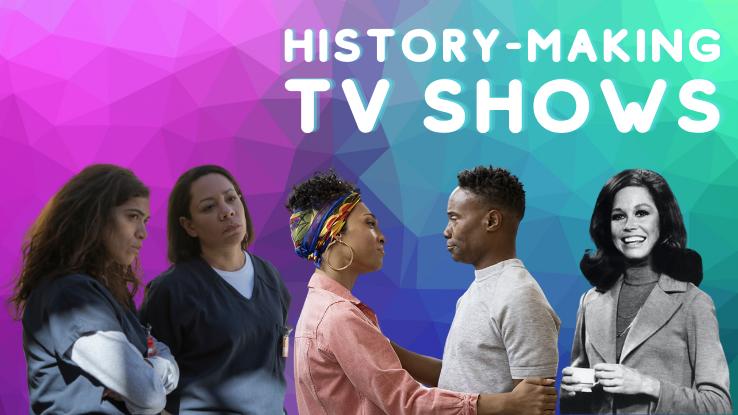
Whether a show is a total guilty pleasure or a highbrow icon of Prestige TV, a feel-proficient sitcom or a high-concept drama, tv has the ability not only to represent and mirror gild but teach us some valuable lessons about acceptance and openness.
That's why we've decided to take a expect dorsum at Television history and highlight a few titles that made TV a more representative, progressive and various place.
I Love Lucy
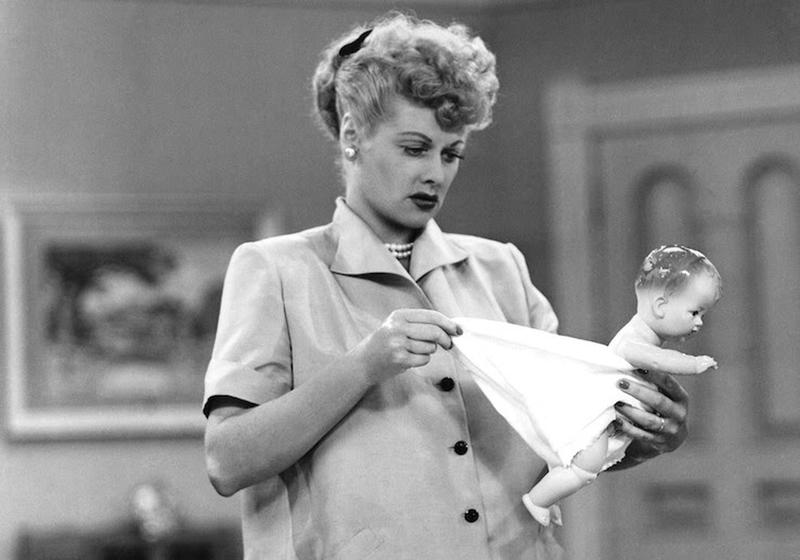
Back in the 1950s, Lucille Ball's sitcom I Honey Lucy, in which her grapheme was married to Ball'southward real-life husband Desi Arnaz, broke a large TV taboo. When the actress became pregnant the couple thought the show, which had aired for ane season on CBS, would be canceled or put on hiatus until after she gave nascency. Pregnancy wasn't a thing that happened on TV at the time. And writing around an actress's pregnancy hasn't always been as easy equally getting Scandal'south Kerry Washington a few fabulous coats.
In the end, Ball's pregnancy was written into the bear witness, an approach that's been used plenty of times in scripted Idiot box since then. The writers would have to avert the word "pregnant" though, considered too vulgar to air. The episode in which Lucy's pregnancy was announced aired in 1952. It was titled "Lucy Is Enceinte" because apparently it's OK to refer to the "p" word in French. The characters used verbal workarounds like "nosotros're having a baby" or "blessed event" to imply Lucy's state.
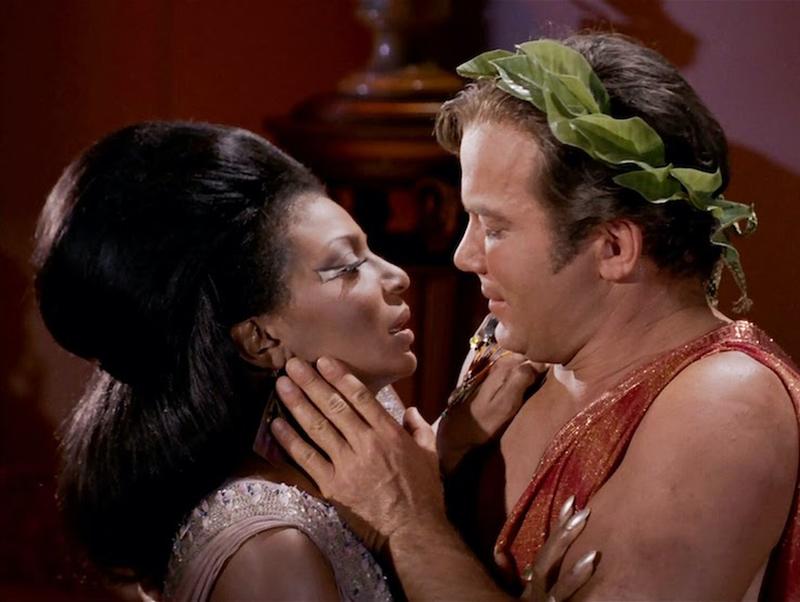
Star Trek: The Original Series not just garnered a devoted following that'southward since spun several sequel series, spin-offs and movie franchises over the decades, information technology was also a rare case of diverseness on screen. Nichelle Nichols played Uhura, a Starfleet Lieutenant and communications officer, making the prove one of the outset to feature a Black adult female not portraying a retainer. George Takei played Lieutenant Sulu, the United states of americaS. Enterprise's helmsman. Having a Japanese American actor in such a visible part just two decades after Globe War Two, a time defined by America'due south anti-Asian policies and racism, also highlighted the show's commitment to representation.
And so there'due south the kiss. Uhura and Captain Kirk (William Shatner) kissed in a 1968 episode while under the influence of aliens. You can argue whether that was the offset interracial kiss on screen or not, but it sure proved the show's dedication to the depiction of a plural and diverse gild. And it confirmed Kirk'southward famous words: "Where I come from, size, shape or color makes no difference."
The Mary Tyler Moore Show
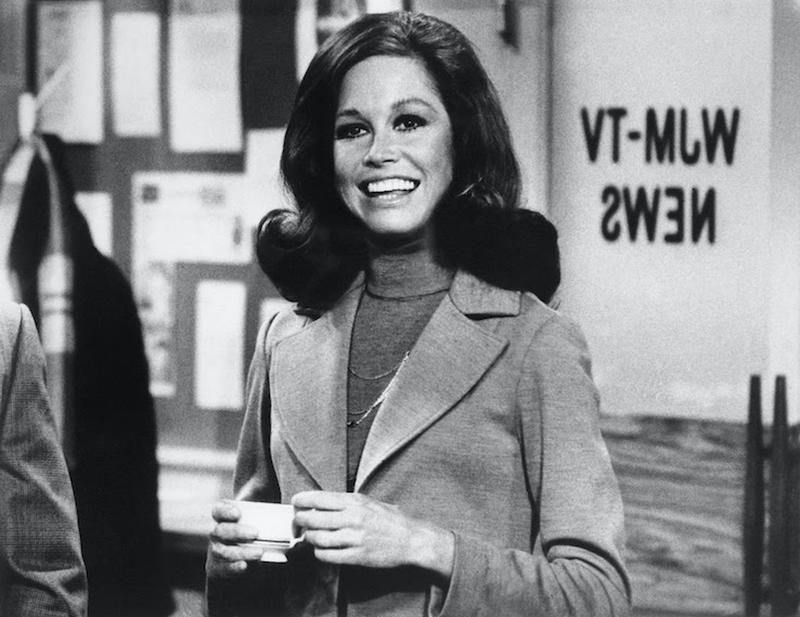
This 7-season sitcom that aired between 1970 and 1977 broke a few molds. It starred Mary Tyler Moore as Mary Richards, a unmarried woman in her 30s focused on her career in a TV station. The show was created by James Fifty. Brooks and Allan Burns simply boasted a writers' room where there was also a significant number of women, especially for the catamenia. Treva Silverman was ane of the beginning women hired as a writer for the show, and, importantly, she shared her own experiences to inform the characters' lives.
Other than in the writers' room, the show was groundbreaking because it focused on the life of an independent career-woman who didn't care most getting married. And although certain themes weren't treated in the same, direct way we've grown accepted to in the past few decades, the evidence fabricated suggestions about Mary having an active sexual life and taking the pill.
It also paved the manner for other career-women-centered shows like Murphy Brown, Ally McBeal,30 Rockand even Sex and the Metropolis.
Ellen
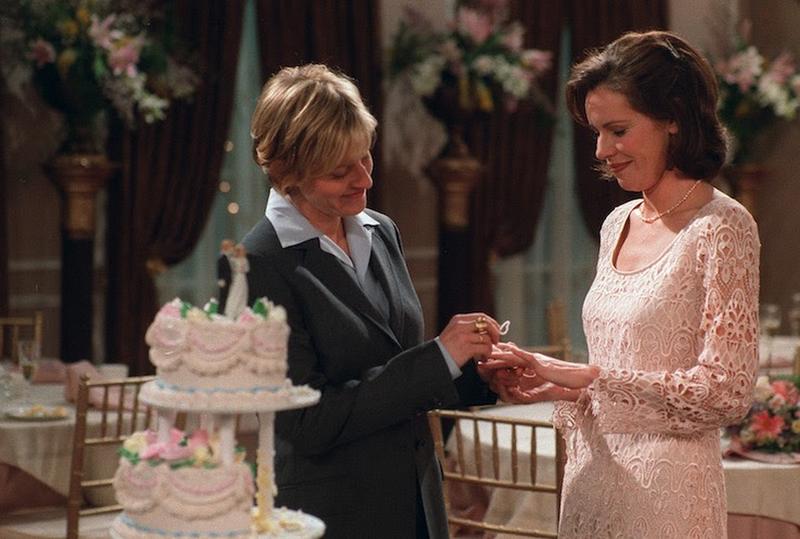
The sitcom Ellen, starring Ellen DeGeneres equally Ellen Morgan, was on its quaternary season when it aired "The Puppy Episode" in 1997. In it Morgan was attracted to a grapheme played past Laura Dern and she came out as gay to her friends. The "Yep, I'm gay" moment was big for American Television set because up until and then gay characters had been relegated to secondary, mostly one-note roles. DeGeneres' character announcing her sexual orientation coincided with the actress herself likewise formally coming out with a Timemag cover and interview.
DeGeneres' figure has been under scrutiny in recent months regarding allegations of a toxic work environment in her talk show The Ellen DeGeneres Show, just in the 1990s her sitcom cleared the way for further LGBTQ representation on TV. The sitcom Will & Grace started airing in 1998 with Eric McCormack playing gay lawyer Will and best friend to Grace (Debra Messing). And then there was Queer every bit Folk on Showtime in 2000. It was an adaptation of a British evidence of the aforementioned proper noun and depicted a group of gay friends — and their sex lives — in a nuanced way.
The Fresh Prince of Bel-Air
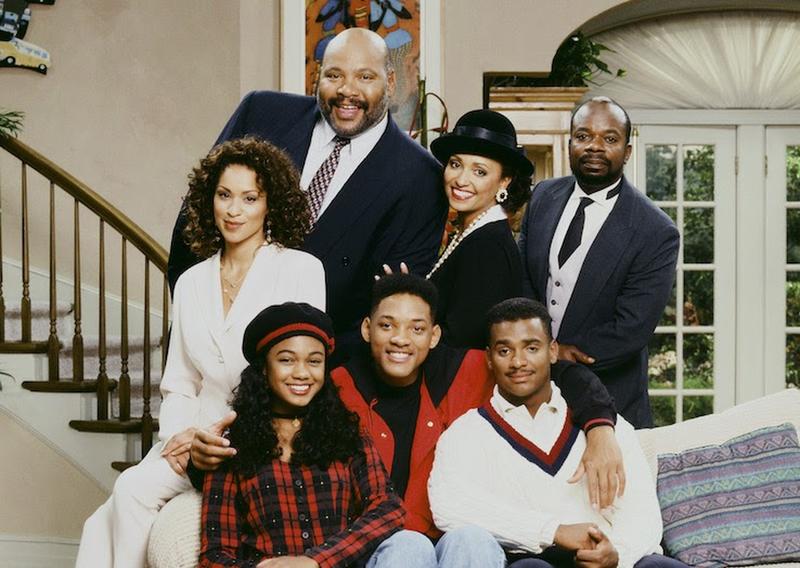
The Banks — and their Philadelphia-born nephew Will Smith — weren't the first Black family on a successful Goggle box sitcom with international success. The Cosby Showreigned showtime with eight seasons, running from 1984 to 1992, before Bill Cosby's sex crimes came to light.
The Fresh Prince of Bel-Air started airing in 1990 and was loosely based on Smith's life. The vi-season sitcom jump-started Smith'southward career. But other than making the protagonist a film star, the show too highlighted the life of a wealthy, stable and college-educated Black family unit, widening the scope of how Black characters were represented on Television set.
And even though it was a sitcom, the evidence likewise tackled serious topics like Police profiling — Will and Carlton (Alfonso Ribeiro) get pulled over past the Police while driving a Mercedes Benz — drug use, gun violence, appointment rape, HIV, racism and other issues.
Ugly Betty
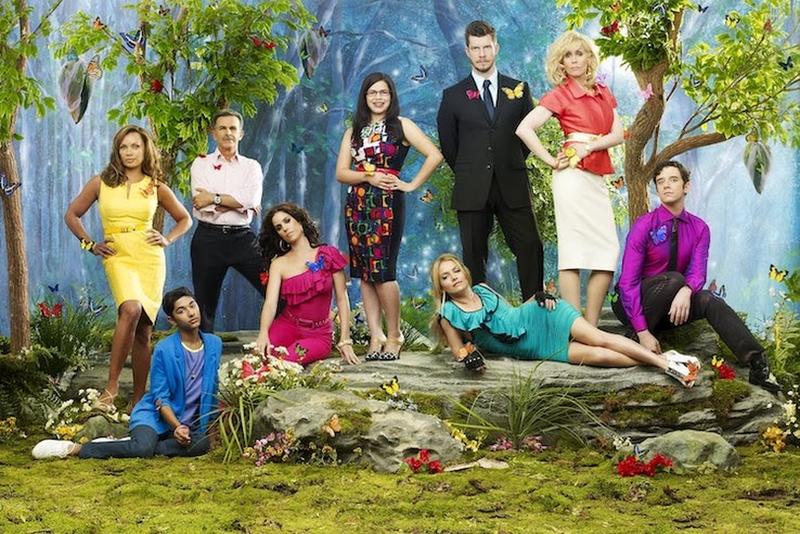
The dramedy Ugly Betty, which ran on ABC for four seasons between 2006 and 2010, was an adaptation of the Colombian telenovela Yo soy Betty, la fea. The show put a Mexican American family front and eye in a primetime bear witness. It likewise starred America Ferrera, who played an unstylish but hard-working adult female who ends up working at a fashion magazine. Tony Plana played Betty'southward dad and he often mixed Spanish and English dialogue in the show, the mode a lot of Hispanic families do. And Ana Ortiz played Hilda, Betty'southward older sister. The show garnered praise for its representation of Latinas on TV.
Only it also addressed topics like body image and Hilda's teenage son coming out every bit gay. As well winning three Emmys, Ugly Bettywon 2 Gay and Lesbian Alliance Against Defamation (GLAAD) Media Awards.
Ortiz is in one case again involved in a history-making Television receiver evidence: Hulu's Beloved, Victor. The testify centers on Victor — a half-Colombian-American, half-Puerto Rican gay teenager — and his struggles to tell his religious family he'due south gay. Ortiz plays Victor's mom.
Orangish Is the New Black
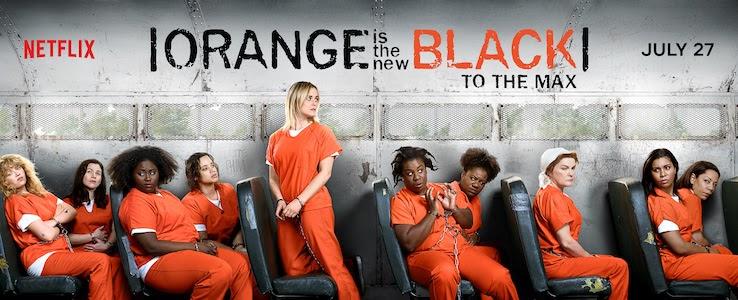
What started as the adaptation of Piper Kerman's memoir about the months she spent in prison for a decade-one-time drug conviction, ended up becoming much more than that. As Jenji Kohan's (Weeds) show progressed, it stopped focusing on Piper (Taylor Schilling) and opened the scope to an incredibly diverse ensemble bandage of women. The prove, which aired for 7 seasons on Netflix from 2013 to 2019, became a refreshing blend of tales from all the women who made it.
In later seasons, the series also commented on the for-turn a profit prison house system and immigration. Just its inclusion of women of all ages, races and backgrounds is what made it stand up out in the first place. Plus, the series has helped cement the careers of actresses Uzo Aduba (Mrs. America, In Treatment), Natasha Lyonne (Russian Doll), Samira Wiley (The Handmaid's Tale) and Laverne Cox (Promising Young Woman).
Pose
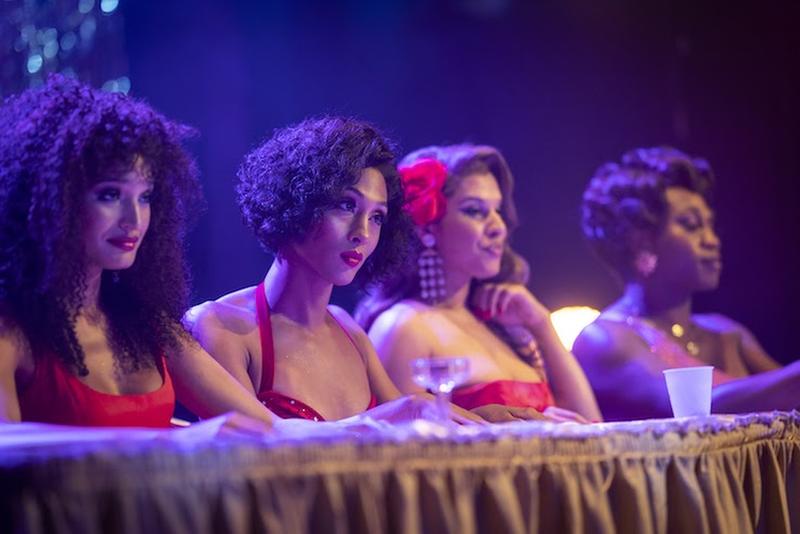
FX's Posenot only meant a front end-row seat to ballroom culture. The prove, created by Ryan Murphy, Brad Falchuk and Steven Canals, is set in the late '80s and early '90s and depicts the lives of a grouping of Black and Latina transgender women and their gay friends. They're in the midst of the AIDS epidemic and endeavour to cleave a place for themselves in a lodge that turns a blind heart or simply rejects them, all while they reshape the definition of family unit.
The show fabricated headlines when information technology offset debuted in 2018 for having the largest transgender cast of whatever scripted series. Non only that, the evidence enlisted writer and activist Janet Mock, and, shortly afterwards, she became the first transgender woman of color to write and direct an episode of tv set. Mock has written and directed several Pose'south episodes since. Pose'due south best-known face is perhaps that of Baton Porter. The Emmy-winning role player has become a red carpet fixture thanks to the show's success. He's taken the mantle from his character Pray Tell and helped redefine what masculinity ways.
Rutherford Falls
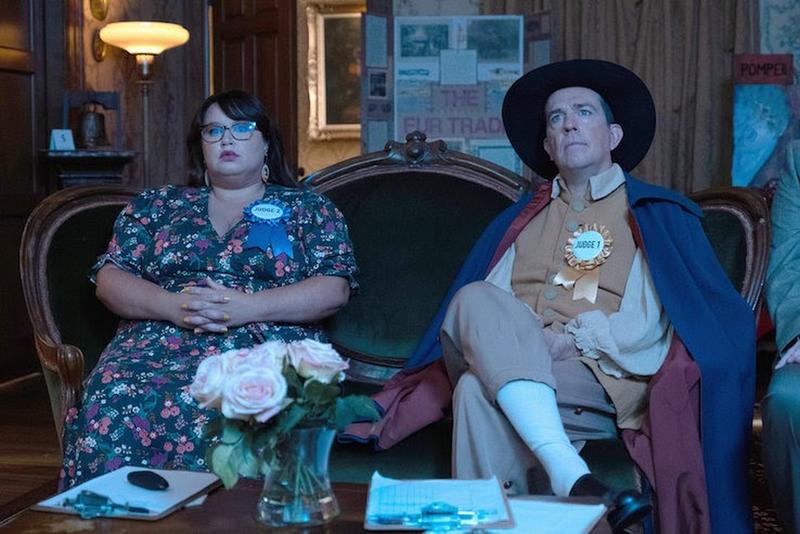
This Peacock sitcom that aired its first season in April 2021 is co-created and executive produced past Ed Helms, Michael Schur (Parks and Recreation) and Sierra Teller Ornelas (Superstore). Teller Ornelas is Navajo and i of the five Native writers on this prove. In fact, Rutherford Fallshas ane of the largest Indigenous writers' rooms in history, co-ordinate to Peacock.
Native American representation is too a big part of Rutherford Fallsin front of the cameras with actors Jana Schmieding and Michael Greyeyes playing members of the fictional Minishonka Nation. Rutherford Fallshas been praised for its depiction of Native American characters and cultures and inclusive representation. The show too stars Helms as Nathan Rutherford and Jesse Leigh equally Bobbie Yang, Nathan'south non-binary executive assistant.
Rutherford Falls has only aired ane flavour and so far simply it'll be interesting to see if it opens new opportunities for Native American narratives told past Ethnic creators and actors.
Source: https://www.ask.com/entertainment/tv-shows-make-history?utm_content=params%3Ao%3D740004%26ad%3DdirN%26qo%3DserpIndex

Posting Komentar untuk "All You Need to Know About Apple Tv"